
Well water treatment for Southwest Ranches and west Broward
On a private well nobody treats your water but you. There's no utility, no annual report and no chlorine going in upstream. Most of Southwest Ranches runs this way, along with western Davie, Plantation Acres and the acreage around Parkland.
What's typically in a west Broward well
Iron stains everything it touches orange: fixtures, laundry, the driveway where the sprinklers hit. It also fouls softener resin, so iron has to come out before the water reaches the softener.
Hydrogen sulfide is the rotten egg smell. It comes from sulfur-reducing bacteria in the deep groundwater, and it's almost always worse on the hot side, because the anode rod in the water heater reacts with sulfates and produces more of the gas.
Hardness is the same limestone story as the rest of the county, often worse, because there's no plant softening anything before it reaches you.
Bacteria is the one nobody sees. A well is an open path to the aquifer, and casings crack. UV treats it.
The order of treatment stages
Well treatment is a sequence, and each stage protects the one after it. Skipping a stage doesn't just lose that stage's benefit, it damages what follows.
Iron ahead of the softener, because iron ruins resin. Sediment ahead of everything, because grit destroys valves. UV last, because it needs clear water to work: bacteria hiding behind a suspended particle never receives the dose.
Why wells need testing
On city water the utility publishes an annual report, which gives a starting point. On a well there's nothing. Two houses on the same road in Sunshine Ranches can draw from different depths and test differently.
The free test matters more out here than anywhere else in the county. It's the only way to know whether you need a four-stage system or a two-stage one.
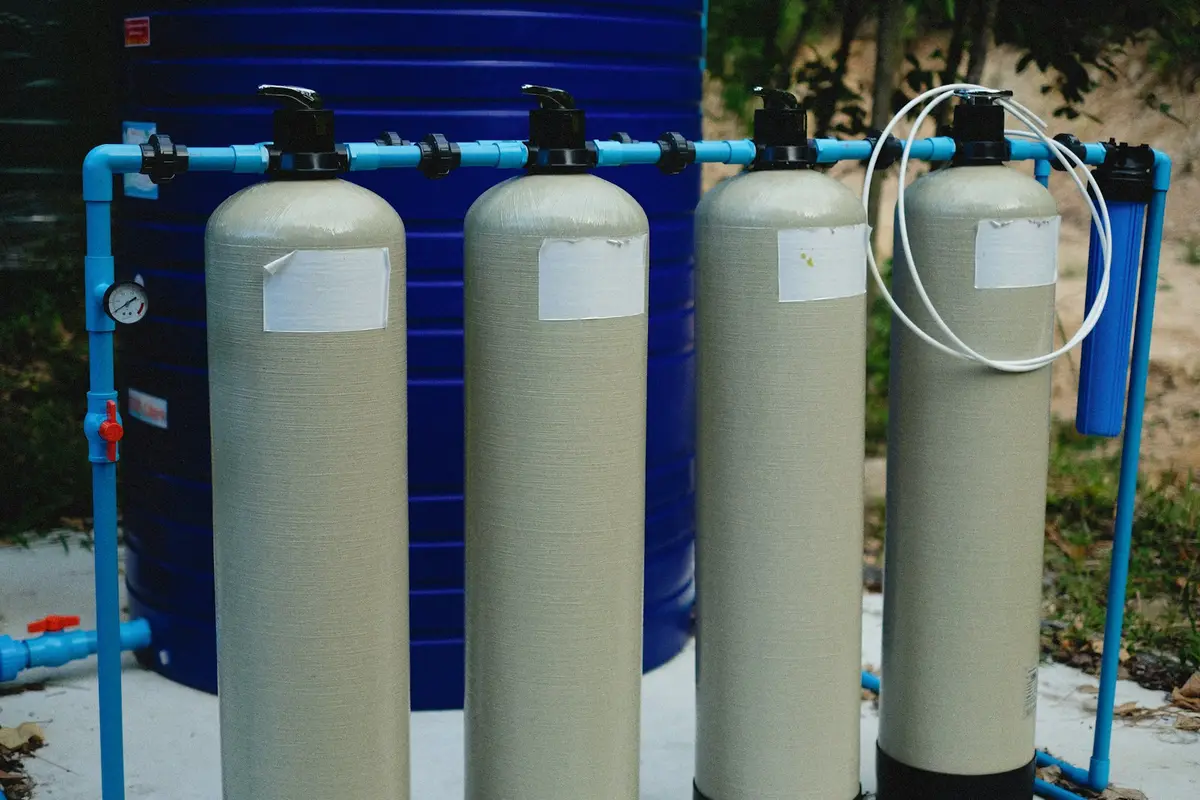
A typical west Broward well stack
- Sediment filtration Sand and grit out first, protecting every valve downstream.
- Iron and sulfur removal Oxidation and filtration for the orange staining and the rotten egg smell.
- Water softening Calcium and magnesium, sized from the well's own hardness reading.
- UV disinfection Bacteria, treated last and only once the water is running clear.
- Reverse osmosis at the kitchen Nitrates and dissolved solids for drinking and cooking.
Where we install it
We cover west Broward. Each city sits on a different supply, so the same equipment gets sized differently depending on where you are.
Related guides
Sources USGS · EWG
- USGS: Groundwater Quality in the Biscayne Aquifer, Florida Biscayne Aquifer is shallow, highly permeable limestone; source of most Broward County groundwater.
- EWG Tap Water Database Utility-reported contaminant data compared against EWG's health-based guidelines.
Questions about well water
Why does my well water smell like rotten eggs?
Hydrogen sulfide gas, produced by sulfur bacteria in the groundwater. If the smell is worse from the hot tap, the water heater's anode rod is reacting with sulfates and making more of it. Both are fixable, and the fix differs depending on which is the main source.
How often should I test a private well?
Annually at minimum, and after any flooding. Broward gets heavy wet seasons and a compromised well casing can let surface water in. Bacteria is the test that matters most, because it's the one with no taste or smell to warn you.
Does Southwest Ranches have city water?
Mostly no. The Town's own website says it is mostly served by individual water wells and septic systems, with only a small portion receiving potable water from Sunrise, Pembroke Pines or Cooper City Utilities. If you're unsure which you're on, check whether you get a water bill.
Can I just put in a softener and be done?
Not on a well with iron. Iron fouls softener resin and the unit stops working within months. Iron comes out first, then hardness. Get the order wrong and the resin has to be replaced.
Find out what's in your water
A free, no-obligation water test at your home, so any recommendation is based on your water.